Tuesday, August 4, 2009

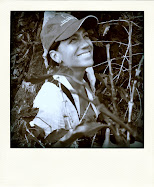
Jim and Wally

July 22, 2009

An important part of the job of the photojournalist is to find a way to gain access into a community -- to become a trusted, invisible witness that can report unadulterated opinions and facts. This is not easy, especially when you only have a couple of days to get the job done.

During the latest RAVE (Rapid Assessment Visual Expedition), Jenny Nichols, the iLCP Director of multimedia, and I were assigned to photograph and document the variety of opinions regarding the future of the Flathead River Valley in the towns and villages surrounding it. We focus our work in the lovely town of Fernie.

The Flathead River Valley, a beautiful valley some 75 kilometers away from Fernie is a very special place. With the largest concentration of grizzly bears in interior of the continent and the largest diversity of carnivores, the Flathead, as it is locally known, is an important wildlife corridor linking British Columbia in Canada to the state of Montana in the US. A series of National Parks and other protected area designations, including the world’s first International Peace Park, Waterton-Glacier, which is also a World Heritage Site, already exist in the area, but because of its wealth of minerals, including coal and coal bed methane, the Flathead has been left unprotected, so as not to shut down the future ability to exploit those mineral resources.

In this rural corner of British Columbia life is simple: fishing and boating in the summer, skiing and hunting in the winter. A “frontier” lifestyle that has been supported for over a hundred years by the coal mines in the region and more recently by a growing tourism industry. Today, no fewer than 5 mines operate in the region and employ a large segment of the population.

At first glance, the industrial footprint of the mines has settled into the landscape and has stroke a balance with nature. Although the tailings are carefully treated and disposed of, there is no question that the water quality in the Elk River valley, where any mining runoff ends up has been diminished. On the positive side, the off-limits areas around the mines are a haven where wildlife thrives away from the hunters.

It is not the existing mines that are creating waves in the international conservation community, however, it is the threat of new mines of the worse kind being proposed for the Flathead River Valley: coal bed methane. What harm can the limited footprint of a mine have on such a large area? Ask some, including the mine geologist, a soft-spoken and smart man who opposes the idea of locking this resource forever if a National Park was established here. Others wonder if the creation of a National Park would bring troves of tourists and force the development of all the facilities tourism demands, including paved roads and infrastructure. Although this would surely be the source of many new jobs, it would also be the end of the frontier lifestyle. As Jenny and I take unto the country roads to find a story line, we marvel at the beauty of the countryside. Neatly kept agricultural fields hold the promise of elk and deer coming out to feed later in the day; we cross our fingers hoping to get a grizzly bear sighting. We head to a boat launching spot called Olson Pit, a few miles out of Fernie. We meet a large group of men, the young ones are getting into the cold water of the Elk River on inflated tubes, the two older men stand watch on the beach, sipping on cold beers and taking in the afternoon sun. Hoping to strike a conversation we approach them and are completely taken aback by their friendly welcome and their willingness to offer information.

Jim, whose teenage boys are now floating down the river, is a good-looking man in his mid-forties. He sports a baseball hat that gives away his profession. He works for the mining industry. However, when asked how he would like to see the future of the Flathead develop, he announces without hesitation that he is for a National Park. Now, that is a complete surprise and one that gives me pause and forces me to reconsider all my preconceived notions on the people of this valley. Wally, however, a smiling fellow who proudly announces he likes to spend the entire summer going around shirtless, disagrees. He fears that a National Park will prevent him from accessing his favorite hunting spots. It is fascinating to me that these two best friends, both mine workers, have such diverging opinions. As the days go by, Jenny and I are able to gather many different opinions on what should happen on the Flathead. Many people believe no new mines are needed and would like to keep the status quo; others would settle for nothing less than full protection through the establishment of a National Park. Concerns about tourism development, access to gold panning and the ability to drive motorized vehicles in the area, all evoke passionate, yet polite discussions with everyone we speak to.

As the days go by we meet some of the most inviting, friendly people we have ever met. As widely different as people’s opinions are, there are a few ideals that strike us for their similarity. Almost unanimously people speak of their desire to maintain their traditional frontier lifestyle and access to the resources; they also speak about the wilderness values of the Flathead and a strong desire to see the place remain pristine into the future. The commonality of these desires is far more striking than the concerns and differences of opinion. To outsiders, like ourselves it sounds like the people of Fernie would like to have their cake and eat it too. I hope the government of Canada can come up with a way to make that wish come true.

Wednesday, June 24, 2009

Shade Grown

Cristina and I traveled to the El Triunfo Biosphere reserve in Chiapas, Mexico on assignment with Conservation International and Starbucks to document the sustainable production of shade grown coffee.

Shade Grown, Cristina Mittermeier from iLCP on Vimeo.

Tuesday, June 2, 2009

Wai Wai Multimedia -Photojournalism in Motion

Empowered.
The government of Guyana granted ownership of 625,000 hectares (1.5 million acres) to the Wai Wai, an indigenous community in the Guyanian Amazon. By air, boat and muddy boot I arrived here, in the Wai Wai Territory.

We are Wai Wai, photography by Cristina Mittermeier from Jenny Nichols on Vimeo.


August 2008

Learn more about Guyana here: http://tinyurl.com/qekuvj

Wednesday, May 20, 2009

GALAPAGOS SHIFTING BASELINE

I see them smiling with their sunburned cheeks and bald spots – American and
European tourists with their fleshy thighs and large-brimmed hats delighted at the completion of the “adventure of a lifetime”. Most of them have come for a 4-5 day “expedition and have done a quick-and-dirty tour of some of the most accessible of the islands. The park service tries to coordinate the departures and docking of the almost 90 ships that provide tour services, but the park seems to already be bursting at the seams and everywhere I go, there are at least 50 other people on the beach. With the approval of over 70 news vessels for tourism, paradise will surely be lost.

Until recently coming to the Galapagos was truly the kind of journey left only for the wealthy and the adventurous, and financing a trip to the archipelago was simply out of reach for most people. Things have changed and the Enchanted Islands are fast becoming the New Cancun, a cheap destination for the tequila-drinking, sun worshiping crowds. Although these lovely islands with their enchanting fauna have remained fairly isolated and remote (and have been protected as a National Park since 1959), the relatively small human population that calls the archipelago home, has slowly swelled and expanded its footprint on some of the larger islands like Isabela, San Cristobal and Santa Cruz. The demands for resources like water, fuel and food, not to mention jobs, has increased relentlessly as the number of people living, working and traveling through the islands has exploded. The smaller, uninhabited or barely inhabited islands are still moderately isolated, but even there, the delicate fauna and flora has long been impacted by pirates, whalers, settlers, invasive species and now, hordes of tourists.

Several species have already gone extinct and many others, like the world-famous Lonesome George, the last surviving giant tortoise from the Island of Pinta, are quite close to disappearing forever from the face of the Earth (as explained by a patient guide at the Darwin Station who desperately tried to keep the attention of his yawning group). What has truly been lost here, however, is the isolation and remoteness of the
Galapagos, which is the magic ingredient that made this place the unique biological experiment that mesmerized Darwin and continues to fascinate naturalists today. That said, with several daily flights and countless ships arriving and leaving from its ports, the islands might as well be located next to Quito. It is no longer possible to find a lonely cove on the shores of the most visited islands; everywhere one goes the “sanctuary of nature” is now shared by as many as 5 or 6 boats, some of them carrying over 80 passengers; an experience more closely resembling an afternoon in Kuta beach or Acapulco. For those of us who have been lucky to travel here in the past, it is clear (and painful) to see how things are changing so fast. New pests are being introduced (even as old nemesis pests, like goats are obliterated at enormous expense from some of the islands) and an uninformed populace is slowly eroding the very habitat that the tourists who support their livelihood are here to see. As if introduced pests and disappearing terrestrial habitats were not enough, the Galapagos park service, the government of Ecuador and the many international and domestic conservation groups that work here have not been able to prevent or stop the massive obliteration of Galapagos marine species. From sea cucumber overexploitation to massive shark fining, the slow demise of the Galapagos is equivalent to allowing massive slaughter of lions and zebras in the Serengeti while all the responsible parties sit on their hands. It is hard to tell if this is part of the natural infighting that occurs in small, contained societies, where conflict and gossip are the preferred way of conducting business and where maintaining ones power and social standing is more important than doing ones job, or if there has been a real lack of vision and leadership to set parameters and establish order in one of our planet’s most beloved “special places”. Either way, the loss of the experience has been lost. I wonder what would happen if instead of opening cheap tourism to the masses, the Park authority charged visitors the real cost of seeing something so unique, endangered and special. The $100 that every visitor pays to enter the park hardly reflects the cost of managing, maintaining, studying, understanding and protecting such a vast archipelago. Just recently a new species of land iguana (a pink creature the size of cat…..not a small, drab beetle!) was discovered. Think about it: new species are still being found in the place where we first learned about evolution and natural selection. Maybe maintaining nature’s experiments isolated should be more important than making a few bucks??

Here are a couple of ideas I would like to throw out:

1. From my point of view (and the idea is shared by some of the movers-and-shakers in the Galapagos), the park entry fee should be closer to $500 US per foreign tourist. This is what tourists who want to spend 20 minutes in the presence of wild Mountain gorillas in Rwanda must pay to see these animals -- and there is a waiting line extending at least a year into the future, so there is no lack of people willing to pay to see something special! What about all the people who won’t be able to afford it? Well, I cannot afford to go many places so I must settle for what I can afford; that is just the nature of capitalism. We cannot please everyone all of the time and the priority should be on maintaining an irreplaceable ecosystem, not on making tourists happy.

2. The funds raised by the park on entry fees and other consumables should stay in the Galapagos. As far as I can tell, most of that money is sent back to mainland Ecuador where it pays for expenses that have little or nothing to do with the Galapagos.

3. The park should be zoned to accommodate different “minimum length visits”. Some of the islands should be reserved for people willing to spend at least 2 weeks in the archipelago. A tourist rushing through the Galapagos in 4-5 days cannot possible be interested in a real immersion in its complex natural history, therefore that person should not be granted access to some of the more isolated, special places.

4. An international group of experts should be assigned to oversee activities and development in the Galapagos. It is impossible to expect the local experts not to have all sorts of biased and self-serving opinions. This is not a criticism, just a recognition of the fact that we are all just human.

5. The park should absolutely NOT be taken off the Endangered World Heritage
Site list. The Galapagos was the first declared World Heritage Site and from what I was able to see in my brief visit, not all is well and the officials in charge have a lot of work ahead of them to make things right. The Galapagos is not “saved”; on the contrary, it is under enormous danger of forever changing and turning into just another cheap tourist trap (no different from Coney Island or Miami Beach). Now, if we cannot save the Galapagos, what hope is there for less interesting places on Earth?

That is just my opinion.

Monday, May 18, 2009

GALAPAGOS-BOUND

I have flown all over the world and to over 60 countries and have had many “trips from hell” with forgotten or lost luggage, rude attendants, drunken or disruptive passengers, delays, crying children and sick people. Never before my latest trip to he Galapagos Islands, however, had I witnessed a case of mass hysteria.

The trip started off on a bad foot as Ecuadorian airline Aerogal announced that our 8:20 am departure was delayed. They didn’t offer and explanation or an estimated time of departure, but hours later we learned that there was a mechanical problem with the aircraft and they were dealing with it. Not being an advocate for flying on faulty aircraft, I found a quiet corner to do some emails, and when the flight left, 4 hours later I was happy to finally be Galapagos-bound.

After a routine refueling stop in Guayaquil we took off again, only to get an announcement from the captain, not 20 minutes into the flight, telling us we were returning to Guayaquil because of the “technical difficulty”. By now the passengers were tired, hungry and angry. Many of them had already missed the departure of their cruise ships in the Galapagos and the atmosphere on the tarmac as we waited on a verdict on whether or not we would be allowed off the plane was tense. A few people tried cracking jokes, but a passenger got off and stormed into the cockpit to demand an explanation. I couldn’t believe my eyes…if this had happened in the United States he would be facing life-in-prison! He eventually came back to his seat and the captain announced our departure again! As we pulled back from the gate, though, screams were heard on the right side of the airplane: “stop the plane, there is fuel pouring unto the tarmac”. What happened next was out of a horror film. People started panicking and screaming to be let out of the plane, babies started crying and women started shrieking. It was hard to believe the scene. The poor flight attendants, with their limited English, tried to calm the passengers and to explain that what had poured out of the airplane were the remnants of the jet fuel the pilot had to dump in order to land with a full tank. It was to no avail. Passengers got off their seats and demanded to return to the gate. To my amazement, the crew yielded and we pulled back into the gate, where 70% of the passengers disembarked, forfeiting their cruise plans (as ships are unlikely to come back to port to pick up any stragglers) and losing their luggage, as the plane took off with all cargo to deliver the rest of us, safely, to the beautiful Galapagos Archipelago.

I have never seen such a case of mass hysteria. Even though I understand the concerns over mechanic troubles and leaking fuel, I doubt that the captain would put us and the aircraft (let alone himself) in danger if he thought it was unsafe to fly.

Ahhh, the joys of travel! Here is something I learned today: when traveling one must try at all costs to remain calm and sensible. Even when you are tired, hungry, angry and stressed out you often find yourself making regrettable decisions. Of course flying is dangerous and one should always be suspicious of too many “mechanical” problems. That said, your best chance of making reasonable choices is to keep a clear head and follow your own gut.

Thursday, April 23, 2009

La beauté au Madagascar

Cristina's Madagascar images are featured in a photo essay on Conservation International's website. Check it out!